
Facebook Lead Ads Examples: Formats Kitchen and Bath Contractors Can Adapt for Consultations
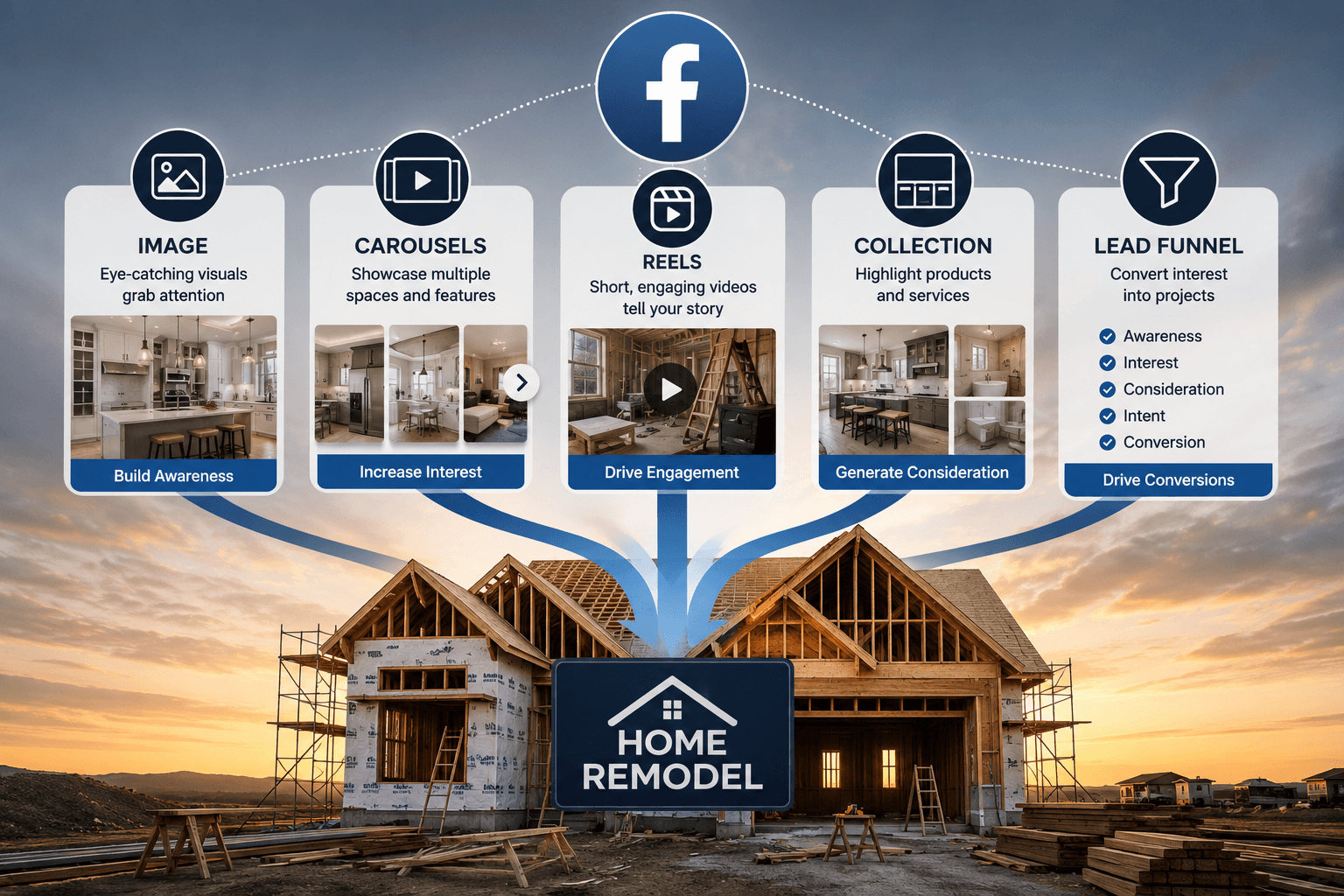
Facebook lead ads examples can be useful when they show how to turn quick attention into a real consultation opportunity. For kitchen and bath contractors, the right format has to do several jobs at once: catch the homeowner’s eye, set the right expectation, and make the next step feel simple.
At BKBG, we work with independent kitchen and bath showrooms across the country, so we know how much lead quality matters. A strong Facebook lead ad should attract homeowners with real project intent, filter out poor-fit inquiries, and give the showroom a clearer path from form fill to consultation.
How Facebook Lead Ads Work and Why They Matter for Kitchen and Bath Showrooms
Facebook Lead Ads make it easier for homeowners to respond from the feed. When someone taps the ad, a native Facebook or Instagram form opens with profile information already filled in, removing the external landing page step that often slows mobile users down.
The Mechanics Behind the Form
Lead Ads are built for low-friction response. Instead of sending the user to a website, Facebook opens an instant form inside the platform. The form can pre-populate fields such as name, email, and phone number using the person’s profile information. For kitchen and bath showrooms, that matters because many homeowners browse Facebook and Instagram on mobile. A native form keeps the experience fast, which can increase response volume and help capture interest before the homeowner is ready for a full website inquiry.
Why Lead Ads Fit the Kitchen and Bath Buying Cycle
Kitchen and bath projects usually have a long consideration period. A homeowner may save ideas, compare budgets, watch project videos, and read planning content before requesting a consultation. Lead Ads help showrooms capture contact information earlier in that research process. A planning guide or cost guide can be a better first offer than a direct consultation request for someone still gathering information. That gives the showroom a way to build the list, stay visible, and nurture the prospect toward a more serious conversation.
Lead Ads and Website Click Campaigns
Lead Ads and click-to-website campaigns serve different jobs within the same funnel. Lead Ads usually produce higher volume because they remove friction, though average lead quality can be lighter when the offer is broad. They work well for top and middle funnel content offers, list building, and early project research. Click-to-website campaigns usually bring lower volume with stronger intent because the user takes an extra step. They work well for bottom-funnel retargeting and direct consultation requests.
The Quality Controls Inside the Campaign
Lead quality depends on the structure of the campaign. The offer sets the level of intent. Creative attracts a specific type of homeowner. Copy frames the reason to respond. Instant form questions can qualify by project type, timeline, location, and budget range. The thank-you screen can point the lead toward a guide, call, or consultation page. Follow-up sequence matters as well. Each piece gives the showroom another way to shape the lead before the sales team responds.
The Instant Form: The Most Important Configuration Decision in Lead Ad Setup
The instant form controls the quality of the lead before the showroom ever follows up. For kitchen and bath Lead Ad campaigns, the wrong form setup can bring in volume without enough project context, intent, or readiness.
Why the Default Form Creates Weak Leads
The default Facebook form usually asks for name, email, and phone number. Since that information can be pre-filled from the user’s profile, the form is easy to submit with very little effort. That can help build a larger list, especially for a planning guide or cost guide offer. For direct consultation campaigns, it often creates a quality problem. A homeowner may tap, submit, and forget the interaction before the showroom calls.
Choose the Right Form Type
Facebook gives advertisers form type options that shape both volume and quality. The right choice depends on the campaign goal.
-
More Volume forms use pre-populated fields and minimal friction. They work best for content offer funnels where the goal is list building, early-stage engagement, and guide downloads.
-
Higher Intent forms add a confirmation step that asks the prospect to review and submit their information. This extra step can reduce submissions, but it usually improves lead quality for direct consultation campaigns.
-
The form type should match the offer. A low-commitment guide can use less friction, while a consultation request needs a stronger signal of intent.
That small setup choice can change how useful the leads feel once the sales team starts calling.
Use Custom Questions as Quality Filters
Custom questions are one of the strongest ways to improve lead quality because they require the prospect to actively respond. Two or three questions usually create a good balance between qualification and completion. Four or more questions may reduce volume, which can be useful when quality is the clear priority.
Strong kitchen and bath questions include project type, expected timeline, approximate budget range, current space challenge, and how the homeowner heard about the showroom. Budget range is often the strongest filter because it shows whether the prospect is prepared for the level of investment involved. An open-text question about the current challenge also gives the follow-up team useful context for the first call.
Make the Thank-You Screen Work Harder
The thank-you screen should confirm what happens next. A generic message leaves the lead wondering when someone will follow up and what the conversation will involve. A better version gives a clear response timeline, explains what to expect in the first call, and links to a project portfolio or process page. The required privacy policy link also matters. A professional privacy policy page supports trust and can make the form feel safer to complete.
Lead Ad Format Example #1: The Consultation Request Ad
The consultation request ad is built for homeowners who already know something about the showroom. It works best for warm, mid-to-bottom-funnel audiences and should make the design consultation feel clear, credible, and worth booking.
Start With the Right Audience
This format should focus on retargeting audiences. Website visitors, video viewers, past post engagers, and lookalike audiences built from past client lists are better suited for a direct consultation ask. Cold traffic rarely moves straight from first impression to booked appointment through a Lead Ad. A homeowner who has already viewed projects, watched a walkthrough, or visited a service page has stronger context. That makes the consultation request feel like a natural next step.
Use Creative That Qualifies Before the Form Opens
Finished project photography should do immediate qualification work. Use a single hero image of a completed kitchen or bathroom that clearly communicates the caliber of work the showroom wants to attract. The project shown in the ad shapes what the homeowner imagines for their own space, so use the showroom’s strongest, most representative work. A 15 to 30 second designer walkthrough can also perform well because it shows expertise, process, and confidence in a compact format.
Write Copy That Explains the Consultation
The headline should be direct and specific, such as “Book Your Free Kitchen Design Consultation” or “Limited Consultation Slots Available This Month.” The primary text should use three to four sentences to explain what happens during the consultation, what the homeowner can expect, and that the first consultation is free. Add one credential signal and one social proof element to build confidence. For stronger qualification, the copy can include a tactful investment range so prospects understand the likely project level before opening the form.
Configure the Form for Serious Inquiries
Use a Higher Intent form for consultation requests because the confirmation step helps filter casual submissions. Ask for project type, project timeline, and one open-text response about the homeowner’s main goal for the space. The thank-you screen should give a specific follow-up timeline, link to the portfolio, and explain what to expect in the first conversation. Follow up quickly with an automated confirmation email, a personal phone call within five minutes during business hours, and a text message for leads who do not answer.
Lead Ad Format Example #2: The Planning Guide Download Ad
The planning guide download ad is built for homeowners who are researching, comparing, and getting organized before they request a consultation. It helps the showroom build an email list of qualified prospects and start the relationship with useful information.
Use the Right Offer for the Research Stage
This format works well for cold to warm audiences in the showroom’s trade area, especially when layered with homeownership, income, and home improvement interest signals. It can also retarget video viewers and past post engagers who have shown early interest. The offer should be specific and practical, such as “What Does a Kitchen Remodel Cost in [City]?” or “The Complete Bathroom Remodel Planning Checklist.” The goal is to meet the homeowner while they are looking for real guidance.
Make the Guide Feel Worth Downloading
The creative should make the resource feel polished, useful, and easy to understand before the form opens.
-
A clean guide cover mockup gives the homeowner a clear picture of what they will receive.
-
A finished project photo with a text overlay can connect the guide to the type of remodel the homeowner is considering.
-
A carousel can show the guide cover first, then preview specific sections inside to build perceived value.
-
The headline should be simple, such as “Free Download: [Guide Title].”
-
The primary text should explain what the guide covers, who it helps, and which planning problem it solves.
Avoid language such as “free estimate” or “get a quote” for this format. The guide should feel helpful and educational.
Configure the Form and Follow-Up
Use a More Volume form because the offer is low-friction and educational. One qualifying question is usually enough, such as “What type of project are you planning?” That allows the showroom to segment follow-up without reducing submissions too much.
The thank-you screen should confirm delivery, provide the download link, and preview additional resources. Follow up with the guide immediately, then send a three-email nurture sequence over 14 days. Around day 21, send a consultation invitation to prospects who opened multiple emails or clicked through to related project content.
Lead Ad Format Example #3: The Showroom Event Invitation Ad
A showroom event invitation ad helps move qualified homeowners from casual interest to in-person engagement. It works well for design trend presentations, vendor launches, designer open houses, and planning workshops that give prospects a useful reason to visit.
Use Events as a Medium-Commitment Offer
An event registration asks for a stronger commitment than a guide download and a lighter commitment than a formal consultation. That makes it useful for homeowners who are interested, curious, and willing to spend time learning before they book. This format can reach homeowners in the trade area who fit the ideal client profile, along with past clients who may be ready to re-engage or refer someone.
Choose the Right Event Format
The event should give homeowners a clear reason to attend. A design trend presentation can position the showroom as an educational resource while making the visit feel aspirational. A vendor product launch can create a sense of access and product discovery, especially for homeowners planning a renovation. A designer open house builds personal connection and makes the team easier to approach. A planning workshop works well for serious prospects who want practical guidance before starting.
Build the Ad Around the Visit
Event creative should show the showroom experience. Use images of live displays, consultation areas, product vignettes, and the design team so the homeowner can picture the visit. A short showroom walkthrough or designer invitation video can add warmth and familiarity. The headline should include the event name and date. The primary text should explain what attendees will experience, what they will learn, who will be there, and why the event is worth their time. Use a Higher Intent form, ask for number of attendees, project type, and timeline, then send immediate confirmation, a 48-hour reminder, and a post-event consultation invitation within 24 hours of attendance.
Targeting Strategy: Getting Lead Ads in Front of the Right Homeowners
Lead Ad quality depends on the form and the audience. A well-built form can still produce weak leads when the ad reaches poor-fit prospects. Strong targeting helps the campaign start with homeowners who match the showroom’s service area, project profile, and likely readiness.
Build Cold Audiences Around Fit
Cold audience targeting should begin with geography. Use a trade area radius or ZIP code list that reflects where the showroom’s strongest clients actually live. From there, layer in homeownership status, since major kitchen and bath renovations usually require ownership. Household income targeting can help concentrate budget on prospects whose likely investment range aligns with the showroom’s work. Home improvement interest signals can add useful intent, while life events such as recently moved or new homeowner status can point to renovation triggers.
Retarget Warm Audiences With Stronger Intent
Warm audiences usually produce better Lead Ad results because they have already interacted with the showroom in some way. Website visitors are often the strongest retargeting group, especially when segmented by page behavior. Portfolio visitors, process page readers, and contact page visitors who left without converting each signal a different level of interest. Video viewers who watched at least half of a project video also show meaningful engagement. Post engagers, including people who liked, commented, or saved content, already have some familiarity with the showroom’s work.
Use Client Data to Find Better Prospects
Past client lists can support reactivation campaigns, referral-adjacent outreach, and lookalike audience building. A lookalike audience built from a showroom’s best past clients can help find new homeowners who share similar characteristics with proven buyers. This is one of the more sophisticated cold targeting options because it uses real customer patterns rather than broad assumptions. The better the source list, the better the audience signal, so showrooms should build these lists from strong-fit clients whenever possible.
Match the Offer to the Audience
The offer should fit the audience’s level of familiarity. Cold audiences usually respond better to lower-commitment content offers, such as planning guides or cost guides, because they may still be early in the research process. Warm audiences can handle a stronger ask, including consultation request Lead Ads, testimonial-driven ads, or social proof campaigns. When targeting and offer work together, the form feels more relevant, the lead quality improves, and the follow-up conversation starts from a stronger place.
How BKBG Supports Lead Ad Success for Independent Showrooms
Running high-quality Facebook Lead Ad campaigns takes strong creative assets, targeting intelligence, form strategy, content offers, and follow-up infrastructure. At BKBG, we help independent kitchen and bath showrooms put those pieces together with greater focus and less internal strain.
Ready-Made Content Offers for Two-Step Funnels
Our Call-to-Action Guides give members professionally produced, showroom-branded downloadable resources that can power planning guide and cost guide Lead Ad campaigns. These offers help showrooms reach homeowners who are still researching and may need useful information before requesting a consultation. Each guide is customized with the showroom’s branding, project photography, contact information, and local identity. That removes the production barrier that often keeps independent showrooms from running effective two-step funnels.
Smarter Targeting Through Local Market Intelligence
Our trade area assessments give members geographic and demographic insight that can directly inform cold audience targeting. We help showrooms identify where high-opportunity homeowners are concentrated within their trade area, so Lead Ad budget can be focused on stronger-fit neighborhoods, household profiles, and project opportunities. That targeting intelligence matters because the quality of a lead starts with who sees the ad. Better audience selection gives each campaign a stronger chance of producing serious consultation requests.
Specialized Agency Support for Better Execution
Our Digital Marketing Affinity Partners give members access to vetted agencies with demonstrated showroom marketing expertise. These partners understand Lead Ad configuration, audience targeting, creative testing, and follow-up system integration for the kitchen and bath consideration cycle. We help members reduce the risk of working with generalist agencies that focus on low cost per lead while the showroom needs qualified prospects, booked consultations, and project revenue.
Creative and Content Infrastructure That Compounds
Our Elevation Blog gives members a continuously updated content library that helps feed warm retargeting audiences. Homeowners who visit the website after reading useful content can become stronger candidates for Lead Ad retargeting. Our Designer Alliance adds another layer through 400 plus designers whose project work, finished photography, testimonial material, and before-and-after documentation can strengthen ad creative.
Bring Better-Fit Prospects Into Your Pipeline
Facebook lead ads examples work best when the format matches the homeowner’s stage in the decision process. Consultation request ads fit warm audiences, planning guide ads capture research-phase prospects, event invitation ads create in-person engagement, and strong targeting helps each offer reach better-fit homeowners.
At BKBG, we help independent kitchen and bath showrooms build the structure behind stronger lead generation. Our Call-to-Action Guides, trade area assessments, Digital Marketing Affinity Partners, Elevation Blog, and Designer Alliance give members practical support for improving lead quality and consultation potential. To build Facebook Lead Ad campaigns that bring better homeowners into the conversation, contact us today.
FAQs
What are facebook lead ads examples that kitchen and bath showrooms can use?
Useful examples include consultation request ads, planning guide download ads, showroom event invitation ads, and retargeting ads built around testimonials or project proof. Each format should match the homeowner’s stage. A planning guide works well for early research, while a consultation request fits someone who has already visited the website, watched project videos, or engaged with the showroom’s content.
Are Facebook Lead Ads good for booking remodeling consultations?
They can be, especially with warm audiences and a well-built instant form. Direct consultation campaigns usually work best for people who already know the showroom through website visits, video views, or prior engagement. The form should use Higher Intent settings, ask a few qualifying questions, and set clear follow-up expectations. Fast follow-up also matters because interest fades quickly after submission.
How does BKBG help independent showrooms with Facebook Lead Ads?
We help our members strengthen the pieces that support better Lead Ad performance. That includes branded downloadable guides, local market insight, access to vetted digital marketing partners, content that feeds retargeting audiences, and project proof from our Designer Alliance. These resources help members improve targeting, creative quality, lead capture, and the path from form fill to consultation.
How do BKBG Call-to-Action Guides support Lead Ad campaigns?
Our Call-to-Action Guides give members professionally produced, showroom-branded resources that can be used in planning guide and cost guide campaigns. Each guide is customized with the showroom’s branding, project photography, contact details, and local identity. They help members capture research-phase homeowners with a useful offer, then nurture those prospects toward a consultation when timing and interest increase.
How do BKBG trade area assessments improve Lead Ad targeting?
Our trade area assessments help members understand where the best homeowner opportunities may be concentrated in their market. We look at geographic and demographic factors that can inform audience targeting, ZIP code selection, and campaign focus. This gives members a stronger basis for spending ad budget in areas that align with their ideal project types, service model, and growth goals.