
Bathroom Remodel Ads: Messaging and Creative That Drive Consultation Requests
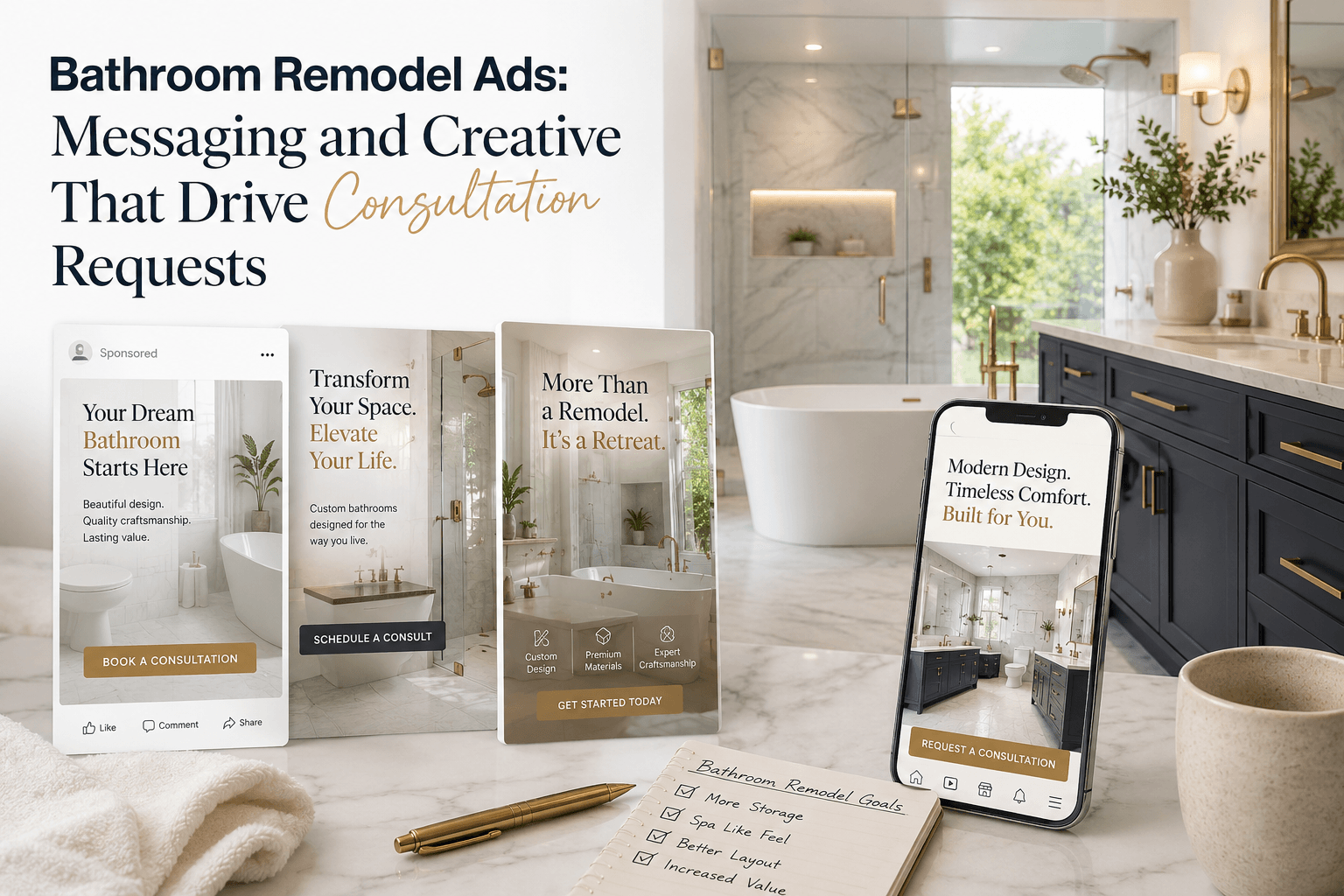
Bathroom remodel ads have a small window to earn attention, build trust, and move a homeowner toward a consultation. The best ones speak to the real reasons people start thinking about a new bathroom: daily frustration, outdated layouts, poor storage, worn finishes, and the desire for a space that feels easier to use every day.
At BKBG, we work with independent kitchen and bath showrooms across the country, so we know how much the right message matters before a homeowner ever walks in. Strong ads connect the project need with the showroom’s expertise, giving serious prospects a clear reason to take the next step.
The Messaging Foundation: What Bathroom Remodel Ads Must Communicate to Drive Consultations
A consultation request asks a lot from a homeowner. Strong bathroom remodel ad messaging has to earn that step by speaking to the homeowner’s situation, reducing uncertainty, and making the showroom feel like a credible choice.
The Commitment Behind the Consultation
When a homeowner books a bathroom design consultation, they are agreeing to invest time, share details about their home, and begin a decision process that may involve a significant remodel budget. That means the ad has to do meaningful work before the call to action appears. It should help the homeowner feel understood, show that the showroom can handle the project, and make the next step feel practical rather than premature. A simple “schedule now” message rarely carries enough weight on its own.
The Four Jobs of Bathroom Remodel Messaging
Effective bathroom remodel ads need to communicate the right signals before a homeowner feels ready to act. Each message should be built around a clear purpose that supports the consultation request.
-
Relevance shows that the showroom understands the homeowner’s frustration, whether that is poor storage, dated finishes, awkward layout, aging fixtures, or a bathroom that no longer fits daily routines.
-
Authority signals that the showroom has the design knowledge, portfolio quality, credentials, and process sophistication to solve the problem well.
-
Trust lowers perceived risk through testimonials, process clarity, transparent expectations, and proof that real homeowners have had a strong experience.
-
Urgency gives the homeowner a timely reason to act, including availability, project timeline realities, seasonal planning needs, or upcoming household changes.
Together, these signals help the ad feel useful before it asks for action.
Match the Message to the Funnel Stage
The lead message should shift based on the audience. Cold audience ads should lead with relevance and authority because the homeowner may be meeting the showroom for the first time. Warm audience ads should emphasize trust, proof, and the showroom’s specific strengths. Hot audience ads can use urgency and a direct consultation invitation because the homeowner has already shown interest. A clear positioning message should connect every stage, giving prospects one consistent reason to choose the showroom over other options.
Creative Strategy: The Visuals That Stop the Scroll and Signal the Right Caliber
Bathroom remodel ad creative has to work quickly. Every image or video should catch attention, communicate design caliber, and attract the kind of homeowner the showroom wants to serve. Strong visuals also help filter inquiries by showing the level, style, and quality of work clearly.
Finished Project Photography
High-quality finished project photography is the baseline for bathroom remodel ads. The room should be well-lit, professionally styled, and clean down to the fixtures, glass, counters, and grout lines. The strongest images often feature dramatic material combinations, unexpected design details, or a visible shift in how the space functions. Styling should support the room without cluttering it, using towels, greenery, candles, or small textures with restraint. A wide hero shot communicates the scale of the transformation, while detail shots show material quality and design sophistication.
Portfolio Curation for Ads
The projects used in ads tell homeowners what kind of work the showroom wants to attract. That makes curation a strategic decision. Promote the caliber of bathroom remodel the business wants to repeat, including the design level, investment range, product quality, and project complexity. A strong portfolio set creates a clear market signal. Prospects can quickly recognize whether their own goals align with the showroom’s work, which helps bring in better-fit consultation requests.
Before-and-After Creative
Before-and-after creative is one of the strongest formats in bathroom remodel advertising because the transformation is immediate and easy to understand. Video reveals work especially well when they move slowly from the existing space into the finished room, giving viewers a clear emotional payoff. Split-screen images can deliver quick visual impact on Facebook and Google Display. The caption should strengthen the creative by naming the specific problem in the original bathroom and the outcome the remodel achieved.
Process and Construction Creative
Process content builds confidence by showing the work homeowners usually miss. Tile layout planning, precision installation, waterproofing details, fixture placement, cabinetry, and material handling all help communicate competence. This creative is especially useful in mid-funnel campaigns, where prospects have already shown some interest and need a clearer reason to trust the team. The “what you do not see” angle works well because it reveals the planning and technical care behind the finished room.
Designer and Team Creative
Bathroom remodels are personal, high-consideration projects, so the people behind the work matter. Designer introduction videos, consultation walkthroughs, and team-at-work photography can make the showroom feel more familiar before the first appointment. This type of creative is especially useful when the designer relationship is a key differentiator. Homeowners want to know who will guide the decisions, listen to concerns, and help make the process feel organized from the start.
Video Ad Creative: The Formats That Drive the Most Consultation Requests
Video gives bathroom remodel ads movement, context, and personality. It can show spatial transformation, designer expertise, and client experience in a format that feels easy for homeowners to absorb. Major platforms also favor video, which can improve both reach and paid campaign efficiency.
The Before-and-After Reveal Video
A strong reveal video should run 15 to 30 seconds and move from the existing bathroom to the work in progress, then into the finished space. The first one to two seconds need to show the problem clearly, such as cramped layout, dated finishes, poor lighting, or limited storage. That opening makes the final reveal feel earned. Music can carry the emotional impact on social platforms, while voiceover can add useful context when the audience is likely to listen.
The Designer Walkthrough Video
A designer walkthrough usually works best at 60 to 90 seconds. The designer can narrate the completed project, explain specific choices, point out details, and describe challenges the team solved along the way. This format builds authority because the viewer hears the thinking behind the work. It is especially useful for mid-funnel retargeting, where prospects already recognize the showroom’s style and need a clearer reason to book a consultation.
The Process Explainer Video
A process explainer should show what actually happens during the design consultation and remodel journey. In 60 to 90 seconds, it can cover the first conversation, showroom visit, measurements, design planning, selections, proposal review, and project coordination. This format addresses a major hesitation: uncertainty. When homeowners understand what they are agreeing to, the consultation feels more manageable, informational, and practical. That clarity can make the booking decision easier.
The Testimonial Video
A testimonial video works best at 30 to 60 seconds, with a past client describing the design process, communication, and finished outcome in their own words. Specific details make the story credible, such as how decisions were handled, how the team communicated, or how the bathroom changed daily routines. Natural speech matters. A testimonial should feel like a real client conversation, which makes it especially useful in retargeting campaigns where trust is the remaining barrier.
Messaging Frameworks: Copy Approaches That Drive Consultation Requests
Bathroom remodel ad copy works best when the message matches the prospect’s stage and mindset. A homeowner seeing the showroom for the first time needs a different prompt than someone who has watched videos, visited the website, and considered booking.
Choose the Framework Before Writing the Ad
Strong ad writing starts with a clear framework. Some messages create recognition, some reduce hesitation, and some push a ready homeowner toward a consultation. A showroom should have several copy approaches available instead of relying on one default message across every campaign. That gives the ad strategy range. Cold audiences may need to see their own frustration named clearly. Warmer audiences may need process clarity, proof, or a specific reason to act.
Match Each Framework to the Funnel Stage
Each framework has a different job, so use it where it can do the most work.
-
The Problem-Agitation-Solution framework starts by naming a specific frustration, such as getting ready in a bathroom designed decades ago. It then expands on the daily irritation, wasted space, or guest-facing embarrassment before introducing the showroom’s ability to solve it. This works well for cold awareness campaigns.
-
The Process Transparency framework explains what happens during the design consultation, including what to bring, what to expect, and what the next steps look like. It helps homeowners who are interested and hesitant because the process still feels unclear.
-
The Investment Framing framework addresses budget reality with tact. A line such as “A professionally designed primary bath remodel in [city] typically represents an investment of X to X” helps pre-qualify prospects before they click.
-
The Social Proof framework leads with a specific client outcome or testimonial excerpt. Detailed results, such as transforming a cramped 1980s layout into a spa-like primary suite, carry stronger weight than generic praise.
-
The Scarcity or Availability framework uses real designer availability to encourage action, such as a limited number of consultation openings this month. This works best for warm prospects close to booking.
The stronger the match between message and moment, the stronger the consultation quality.
Use Clarity as the Conversion Filter
The best ad copy makes the next step feel informed. Budget language filters for readiness. Process copy lowers uncertainty. Social proof builds confidence. Availability gives a practical reason to stop delaying. Each approach should help the homeowner understand what the showroom does, what kind of project it handles, and what booking a consultation actually means. That clarity improves the chances of getting inquiries from people who are ready for the level of work being offered.
Measuring Ad Performance Against Consultation Requests
Bathroom remodel advertising should be measured by the business outcomes it creates. Clicks, reach, and impressions can help diagnose activity, but consultation requests, show rates, proposals, and closed projects reveal whether the campaign is producing useful demand.
Track the Metrics That Connect to Consultations
The right metrics show how well each step of the campaign is working. They help a showroom see where the ad is strong, where the path breaks down, and which channels deserve continued investment.
-
Click-through rate shows whether the creative and messaging are earning enough interest to bring homeowners to the next step.
-
Landing page conversion rate shows whether the page is turning clicks into form submissions or consultation requests.
-
Cost per consultation request shows what the showroom pays to generate one booked consultation.
-
Consultation show rate shows the percentage of booked consultations that actually happen.
-
Lead-to-consultation rate by platform shows which channels produce prospects who are serious enough to follow through.
Together, these metrics help separate visible activity from real consultation momentum.
Measure the Business Outcomes Behind ROI
Ad performance should connect all the way to revenue. That means tracking consultation-to-proposal rate by ad source, close rate by ad source, average project value by ad source, and cost per closed project by channel. These numbers reveal which platforms produce better-fit homeowners and which campaigns attract leads that stall before meaningful sales conversations. Cost per closed project is the clearest metric for channel investment because it ties spend directly to won business.
Build a Testing and Review Rhythm
A disciplined testing process keeps campaign decisions grounded. Test one variable at a time, such as creative, copy, offer, or audience, so performance changes can be read clearly. Avoid judging results too early. A small sample can make weak signals look convincing, so wait for enough data before shifting budget. Refresh creative regularly with new project photography and message variations before ad fatigue sets in. A monthly review should connect spend, consultations booked, consultations held, proposals issued, and projects closed.
How BKBG Helps Independent Showrooms Run Better Bathroom Remodel Ads
Running effective bathroom remodel ads takes strong creative, sharper messaging, disciplined targeting, and clear performance measurement. At BKBG, we help independent showrooms strengthen the campaign foundation that turns ad spend into better consultation requests.
Lead Capture Assets That Support the Consultation Path
Our Call-to-Action Guides give showrooms professionally produced, showroom-branded downloadable resources that support the two-step consultation offer. Many homeowners researching a bathroom remodel want useful planning information before they book. Each guide is customized with the showroom’s branding, project photography, contact details, and local identity. That gives our members a polished lead magnet without building one from scratch, helping them capture research-phase homeowners earlier.
Local Intelligence for Smarter Targeting
Our trade area assessments give showrooms geographic and demographic insight that can directly inform bathroom remodel ad targeting. We help members identify where high-opportunity homeowners are concentrated, which neighborhoods fit the showroom’s ideal project profile, and which household characteristics may signal readiness for a larger remodel. That intelligence helps ad budget work with greater focus, so campaigns reach homeowners whose needs, homes, and likely investment levels align with the showroom’s work.
Specialized Marketing Support for Better Campaigns
Our Digital Marketing Affinity Partners give members access to vetted agencies with demonstrated showroom marketing expertise. Bathroom remodel advertising has a longer consideration cycle, so campaigns need to be built around lead quality, retargeting, landing pages, and booked consultations. These partners understand the difference between generic form fills and serious consultation requests. With the right agency support, our members can manage paid search, paid social, creative testing, and optimization with stronger commercial discipline.
Content Infrastructure That Improves Performance
Our Elevation Blog gives members a continuously updated content library that supports website authority, organic search visibility, and retargeting performance. Educational content gives homeowners helpful context while they compare options and consider next steps. Our Designer Alliance adds another layer through 400 plus designers whose project work, designer perspective, finished photography, process documentation, and commentary can strengthen ad creative.
Put Better Messaging Behind Every Bathroom Campaign
Bathroom remodel ads perform best when the message, creative, audience, and offer all work together. Strong campaigns speak to real homeowner frustrations, show high-quality project proof, use video to build trust, and match the call to action to the prospect’s stage in the decision process.
At BKBG, we help independent showrooms strengthen the systems behind better advertising. Our branded guides, trade area assessments, Affinity Partners, Elevation Blog, and Designer Alliance give members practical support for improving lead quality and campaign performance. To turn stronger bathroom remodel campaigns into better consultation requests, reach out to us today.
FAQs
What makes bathroom remodel ads effective for consultation requests?
Effective ads give homeowners enough confidence to take the next step. That means the message should speak to a specific problem, the creative should show the quality of the work, and the call to action should feel appropriate for the homeowner’s stage. A strong ad helps the prospect understand the showroom’s expertise before asking them to book time.
Which ad creative works best for bathroom remodeling campaigns?
Before-and-after visuals usually perform well because the transformation is easy to understand quickly. Finished project photography shows design caliber, while short video reveals add movement and emotional impact. Process content can also build trust by showing the care behind the finished space. The best creative mix gives homeowners beauty, context, and proof of professional execution.
How does BKBG help independent showrooms improve bathroom remodel advertising?
We help our members strengthen the foundation behind better campaigns. That includes branded lead capture resources, trade area insight, digital marketing partner access, educational content, and designer-driven project proof. These pieces help showrooms improve creative quality, reach better-fit homeowners, and create a clearer path from ad engagement to consultation request.
What role do BKBG Call-to-Action Guides play in ad campaigns?
Our Call-to-Action Guides give members professionally produced, showroom-branded resources that can be used as lead magnets. They help capture homeowners who are researching and planning before they are ready to book a consultation. Each guide includes the showroom’s branding, contact details, and project photography, giving prospects a useful next step while helping the showroom identify early interest.
How do BKBG trade area assessments support ad targeting?
Our trade area assessments help members understand where stronger opportunities may exist in their local market. We look at geographic and demographic factors that can inform audience targeting, neighborhood focus, and project positioning. That insight helps showrooms put ad spend behind the areas and homeowner profiles that align with their services, project goals, and preferred customer base.