
Marketing Strategy for Construction Business: How Kitchen and Bath Contractors Can Build a Better Le
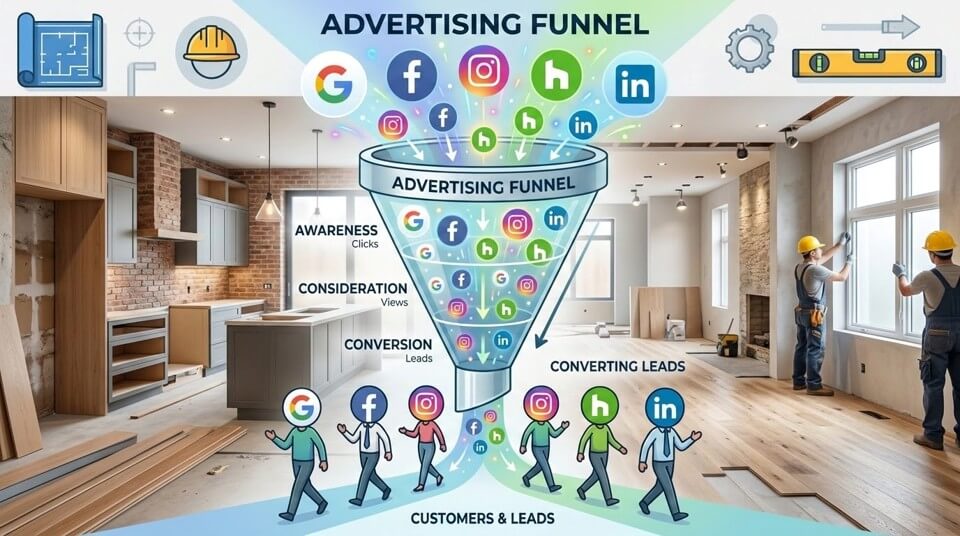
A marketing strategy for construction business is where a stronger lead pipeline starts, long before the first call. Homeowners are searching, comparing, saving photos, checking reviews, and forming opinions while your team is busy running projects. For kitchen and bath contractors, that early attention needs direction, proof, and a clear path toward action.
At BKBG, we work with independent kitchen and bath showrooms that need marketing tied to real sales conditions. We understand the daily pressure: limited time, complex projects, local competition, and prospects at very different stages of readiness. The right strategy helps your business attract better-fit homeowners, build trust earlier, and turn scattered interest into project opportunities worth pursuing.
The Pipeline Framework: How a Kitchen and Bath Lead Pipeline Actually Works
A lead pipeline gives your marketing structure. For kitchen and bath contractors, it creates a continuous system that attracts new prospects, nurtures people already paying attention, and converts homeowners who are ready for a serious project conversation.
The Pipeline Concept for Kitchen and Bath Remodeling
A strong pipeline runs across the full customer journey. Homeowners may first encounter a showroom through local search, social media, a referral, a blog post, a project gallery, or a review. From there, the marketing system should keep giving them useful reasons to stay engaged. That means clear service pages, strong portfolio proof, educational content, retargeting, email follow-up, and calls to action that match the homeowner’s stage. A marketing strategy for construction business works best when these pieces operate continuously, so future opportunities are being warmed while current projects move through sales.
The Five Pipeline Stages
Kitchen and bath prospects usually move through five practical stages:
-
Awareness includes homeowners who fit the ideal client profile and are first discovering the showroom.
-
Interest includes homeowners who have visited the website, followed social media, read content, or engaged with project photos.
-
Consideration includes homeowners actively reviewing the team, portfolio, reviews, process, and alternatives.
-
Intent includes homeowners who prefer the showroom and are moving toward a consultation.
-
Conversion includes the booked consultation, delivered proposal, and signed project.
Each stage needs a clear marketing role, because homeowners need different information as they move forward.
Why Every Stage Needs Attention
A pipeline focused mainly on conversion creates uneven demand because the next group of prospects may still be too early when current projects close. A pipeline focused mainly on awareness can build attention that lacks direction. The strongest systems keep every stage active at the same time. Awareness work today may create consideration-stage prospects in three months and intent-stage prospects in six. That compounding effect makes future revenue easier to forecast.
Pipeline Velocity and the Buying Cycle
Kitchen and bath decisions usually take time because homeowners are weighing budget, disruption, design trust, product choices, and household timing. Good marketing respects that pace. It gives prospects the right proof at the right moment, then makes the next step clear when they are ready.
Building Awareness: Filling the Top of the Pipeline
Awareness brings the showroom into a homeowner’s field of view before active search begins. The goal is familiarity with the right people in the right trade area, so future project decisions start with a known local resource.
Organic Search as an Awareness Engine
Local SEO helps a showroom appear when homeowners begin researching kitchen and bath remodeling in the surrounding market. Early searches often include style ideas, neighborhood remodeling questions, cost signals, layout problems, storage frustrations, and local planning concerns. Content built around those topics can attract homeowners early in the journey and keep the showroom visible as their thinking matures. Style and trend pages, problem-aware posts, and local market guides all support this stage. The Elevation Blog can serve as a practical awareness engine by adding professional weekly content that strengthens local search visibility over time.
Social Media Awareness
Kitchen and bath showrooms have a visual advantage. Project photography, before-and-after sequences, cabinet details, layout improvements, and short process clips can stop the scroll with real local relevance. Instagram Reels and Facebook help reach homeowners in the trade area with efficient visual exposure. Pinterest reaches homeowners who are saving ideas and shaping preferences. Project proof gives social awareness added weight because it shows skill, taste level, and finished outcomes in a way homeowners can remember.
Paid Awareness Campaigns
Facebook and Instagram awareness campaigns can introduce the showroom to in-profile homeowners based on geography, homeowner signals, household profile, and renovation-related interests. These campaigns are designed to build recognition first. As people watch videos, visit pages, and engage with posts, they become part of retargeting audiences for later messages. Measure this stage through reach, website traffic growth, new followers, brand recall signals, and organic search ranking gains.
Generating Interest: Moving Awareness Into Engagement
Interest turns first exposure into active engagement. At this stage, homeowners begin visiting the website, following social channels, reading useful content, watching project videos, and giving the showroom a place in their planning process.
The Website as an Interest Capture Mechanism
The website should help a casual visitor become an engaged prospect. That means clear navigation, useful service pages, strong project galleries, and conversion paths that feel natural. A visitor may browse several rooms, study a portfolio, bookmark a design idea, download a planning guide, or subscribe for updates. Each action signals growing interest. The portfolio experience matters because organized project photography helps homeowners self-select by style, scope, room type, and project complexity.
The Process Page as a Turning Point
The process page often does the heaviest lifting at this stage. Homeowners who read about consultations, design steps, selections, timelines, communication, and installation are starting to imagine working with the showroom. That curiosity is valuable. It shows the homeowner is thinking about fit, comfort, expectations, and trust. A strong process page gives that person enough structure to keep moving through the site with purpose.
Content That Keeps Homeowners Coming Back
Useful content turns the showroom into a resource during a long research cycle. Cost guides, process explainers, comparison pages, before-and-after stories, construction updates, and designer commentary all support deeper engagement. Email signups help carry that relationship forward as homeowners continue planning. Social follows also matter because they create ongoing visibility through project posts, reels, and updates. Measure interest through time on site, pages per session, return visits, email growth, follower growth, video views, and content downloads.
The Referral Pipeline: A Parallel System That Feeds Every Stage
Referrals create a separate source of demand with a higher trust level from the start. Past clients and trade professionals can bring homeowners into the pipeline with stronger confidence, clearer expectations, and faster movement toward a project conversation.
Past Client Referral Pipeline
Past client referrals work best when they are built into a repeatable process. A showroom can ask for referrals at natural moments, such as after a successful project close, after a strong review, or during a follow-up conversation. Ongoing visibility matters, too. Email updates, social posts, anniversary check-ins, project spotlights, and personal notes keep the showroom familiar after the remodel is complete. Past client custom audiences can also support the relationship through Facebook and Google campaigns that keep recent work, planning guides, and showroom updates in front of satisfied clients.
Trade Professional Referral Pipeline
Trade professional referrals often arrive with a quality premium. Architects, interior designers, builders, and other local professionals can send homeowners who already understand the value of professional guidance, stronger products, and coordinated planning. These prospects may enter at the consideration or intent stage because a trusted person has already made the introduction. Building that network takes steady outreach, clear communication, useful project collaboration, and consistent follow-up. The showroom needs to become easy to recommend, easy to work with, and dependable once the client is referred.
Digital Support for Referral Relationships
Digital marketing can keep referral relationships warm between direct conversations. A polished LinkedIn presence helps trade contacts see current work and professional momentum. Trade-focused social content can show process, project standards, and collaboration style. Email marketing to referral contacts can share completed projects, showroom updates, product notes, and useful planning resources. When the relationship system and digital system work together, referrals become a steadier part of the overall lead pipeline.
Measuring and Managing the Pipeline
A healthy pipeline is measured stage by stage. Lead count matters, but the sharper question is whether homeowners are moving forward, where they slow down, and which marketing mechanisms help them take the next step.
Stage-Specific Metrics
Each stage needs its own scorecard. Awareness metrics include reach, local search rankings, website traffic, and new social followers. Interest metrics include return visitor rate, email subscribers, content downloads, and social engagement. Consideration metrics include portfolio page engagement, case study views, review strength, and retargeting engagement. Intent metrics include consultation requests, form conversion rate, and cost per consultation request. Conversion metrics include consultation-to-proposal rate, close rate, average project value, and revenue by source. When these numbers are tracked separately, the showroom can see the full movement of demand instead of treating every inquiry as the same kind of opportunity.
Pipeline Health Indicators
These indicators show where the pipeline is strong and where it needs attention:
-
Stage volume ratios show the proportion of prospects at each stage, which helps identify thin spots or congestion.
-
Stage conversion rates show the percentage of prospects moving from one stage to the next, which helps reveal where momentum drops.
-
Pipeline velocity shows how long prospects spend in each stage, which helps identify where education, follow-up, or retargeting should work harder.
Together, these indicators make pipeline management practical because they connect marketing activity to actual buyer movement.
The Quarterly Pipeline Review
A quarterly review keeps the system honest. Compare each stage against targets, then identify the bottleneck with the largest gap between expected movement and actual performance. A showroom may discover plenty of awareness with weak interest, strong consideration with low consultation requests, or solid consultations with poor proposal conversion. Budget should move toward the mechanism serving the most constrained stage, whether that is content, retargeting, landing page improvement, email nurturing, or sales process refinement.
Annual Pipeline Planning
Annual planning should work backward from revenue goals. Start with the target revenue, then calculate the closed projects required, consultations needed, intent-stage prospects, consideration-stage prospects, interest-stage audience, and awareness reach. Channel investment becomes easier to justify when each channel has a defined role in moving prospects through a specific stage.
How We Help Independent Showrooms Build Better Lead Pipelines
At BKBG, we help independent kitchen and bath showrooms build lead pipelines with structure, consistency, and practical support. A genuine pipeline requires market intelligence, content infrastructure, channel expertise, and operational discipline working together across every stage of the buyer journey.
Awareness and Market Visibility
We support awareness by helping showrooms get in front of the right homeowners earlier. Our Elevation Blog builds local search authority with professional weekly content that gives homeowners useful reasons to discover the showroom during early research. Our Digital Marketing Affinity Partners can manage paid awareness campaigns that introduce the showroom to in-profile homeowners across the trade area. Our trade area assessments sharpen that work by identifying where high-opportunity homeowners are concentrated.
Interest and Consideration Support
Once homeowners begin paying attention, we help showrooms keep that interest active. The Elevation Blog gives members a steady content base that brings people back to the website. Our call-to-action guides help capture interested homeowners through useful, branded resources before they are ready for a consultation. During consideration, our Designer Alliance adds strength through design expertise, project photography, and case study potential that helps homeowners evaluate the showroom with greater confidence.
Intent, Conversion, and Referral Strength
We support the intent stage with resources that help homeowners take a clearer next step. Call-to-action guides can serve as strong offers for prospects preparing to engage. Our digital marketing Affinity Partners can manage paid search campaigns that capture declared intent, while trade area assessments guide geographic focus. At conversion, our business advisory services help showrooms improve consultations, proposals, and closing discipline. Our peer network also gives members access to proven strategies from other strong operators.
The Pipeline Infrastructure Advantage
Our members build pipelines with stronger infrastructure at each stage. Professional content keeps the showroom visible. Vetted agency support improves execution across channels. Market intelligence makes targeting sharper. Designer access and peer guidance strengthen credibility and process. Together, these resources help BKBG members create pipelines that fill faster, move more efficiently, and convert at stronger rates.
Turn Marketing Into Steadier Project Momentum
A marketing strategy for construction business gives kitchen and bath contractors a steadier way to attract, nurture, and convert homeowners. Awareness, interest, consideration, intent, conversion, referrals, and measurement all need structure. When each stage has a clear role, the pipeline becomes easier to manage and easier to improve.
At BKBG, we help independent showrooms build that kind of pipeline with market intelligence, professional content, vetted digital partners, business guidance, and peer insight. Stronger lead flow starts with stronger systems. To bring sharper strategy and better project momentum into your showroom, contact us today.
FAQs
What is a marketing strategy for construction business, and why does it matter for kitchen and bath contractors?
It is a structured plan for attracting the right homeowners, keeping them engaged, and moving them toward a signed project. For kitchen and bath contractors, the buying cycle can stretch across weeks or months, so the strategy needs to support every stage. A strong plan connects local visibility, content, referrals, paid media, follow-up, and sales process into one workable pipeline.
How can a kitchen and bath contractor build a stronger lead pipeline?
Start by mapping the full homeowner journey. Identify how people discover the business, what keeps them interested, what proof they need during consideration, and what offer moves them toward a consultation. Then match each stage with a marketing mechanism. Local SEO, project galleries, reviews, email, social media, referral outreach, and paid campaigns all serve different pipeline roles.
How does BKBG help independent showrooms build better lead pipelines?
At BKBG, we support independent kitchen and bath showrooms with resources that strengthen every stage of the pipeline. We provide trade area assessments, weekly blog content, branded call-to-action guides, digital marketing Affinity Partners, business advisory services, and peer support. Our goal is to help members attract better-fit homeowners and move them through the sales path with greater clarity.
How does BKBG support awareness and early-stage visibility?
We help showrooms become visible to homeowners earlier in the planning process. Our Elevation Blog provides professional weekly content that supports local search visibility and gives homeowners useful planning information. Our trade area assessments help members understand where strong opportunities are concentrated. Our digital marketing Affinity Partners can also support paid awareness campaigns aimed at in-profile homeowners.
How do BKBG call-to-action guides help with lead generation?
Our call-to-action guides give showrooms professionally produced, showroom-branded resources that homeowners can download during the planning process. These guides create a practical conversion point for people who are interested but still gathering information. We use them to help members grow email lists, support nurture campaigns, strengthen retargeting offers, and encourage better project conversations.