
Content Marketing for Contractors: How to Create Content That Wins Better Kitchen and Bath Projects
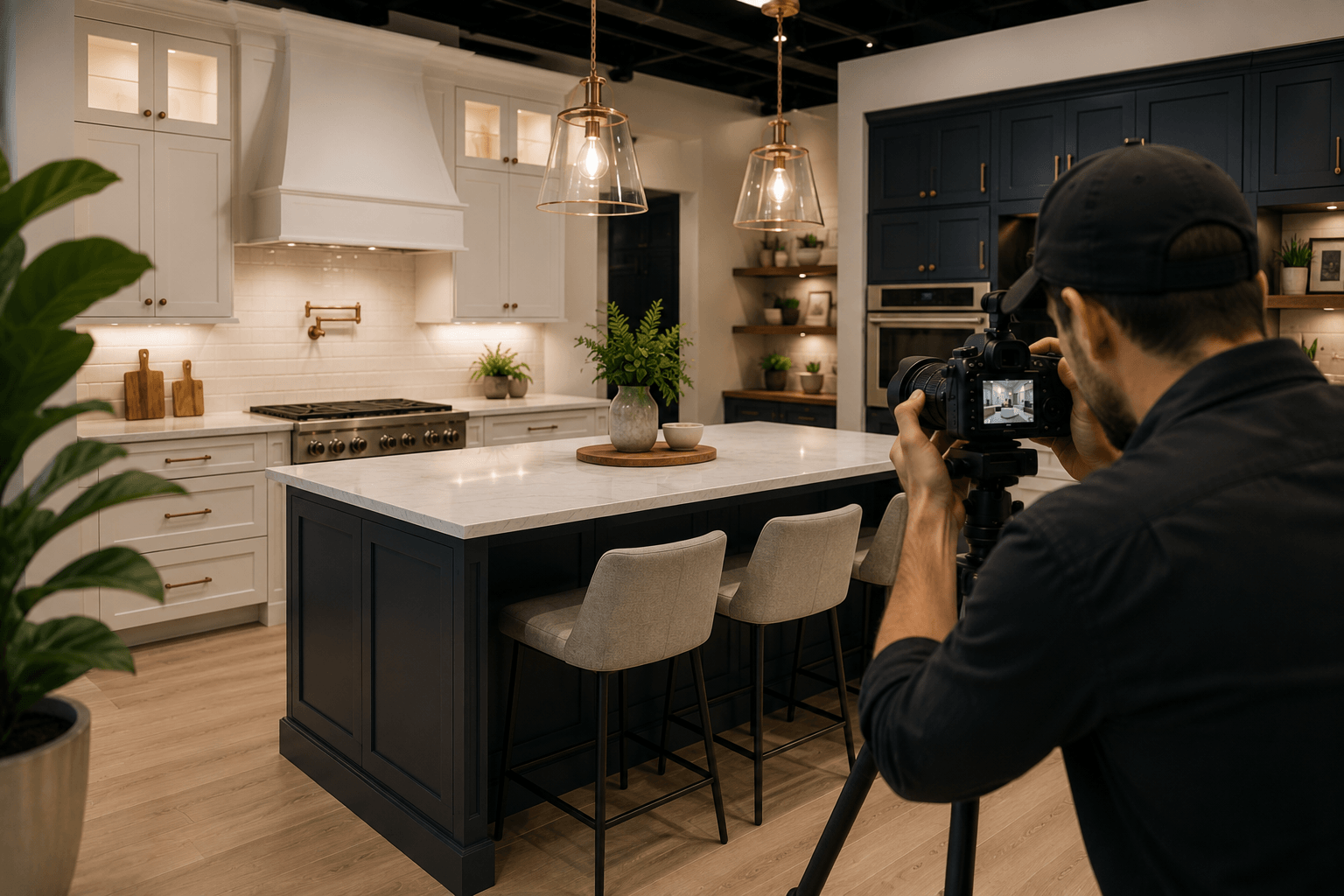
Content marketing for contractors has a reputation for being either too time-consuming to sustain or too generic to move the needle. The showrooms getting it right are pulling ahead of their competition in ways that paid advertising alone cannot replicate. The work is already happening. The expertise is already there. The question is whether it is being put to use.
At BKBG, we work closely with independent kitchen and bath showrooms navigating exactly this challenge. We have seen what separates the businesses that generate a steady stream of qualified prospects from the ones waiting for referrals to come in. The difference is almost always intentional, and it starts with content.
What Content Marketing Actually Means for Kitchen and Bath Showrooms
Content marketing gets misunderstood more often than most business strategies. For independent showrooms, getting clear on what it actually is and what it can do is the starting point for building something that generates real results rather than just activity.
More Than Posts and Blog Articles
Most people hear "content marketing" and picture Instagram grids and weekly blog posts. That framing undersells what the strategy actually involves. Content marketing is the practice of creating and distributing genuinely useful information that attracts your ideal client and builds enough trust that choosing your showroom feels like the natural next step. The format is secondary. What matters is whether the content serves the person receiving it and moves them meaningfully closer to a conversation with you.
Why Kitchen and Bath Is a Natural Fit
Few categories are better suited to content marketing than kitchen and bath remodeling. Homeowners typically spend months in the research phase before they contact a single showroom, which means there is a long window during which useful, well-placed content can shape their thinking and build familiarity with your business. The emotional investment is significant too. A kitchen remodel is rarely an impulse decision, and the homeowners approaching it carry real anxiety about choosing the wrong contractor. Content that demonstrates expertise and communicates process lowers that anxiety faster than any ad campaign could.
Content That Generates Projects, Not Just Traffic
There is a meaningful distinction between content that brings people to your website and content that brings people into your showroom. Traffic is measurable and satisfying to watch grow, but it is not the goal. The content worth investing in is the kind that attracts homeowners already thinking seriously about a remodel, answers the specific questions keeping them from moving forward, and positions your showroom as the obvious place to start the conversation. That focus shapes every decision about what to create, where to publish it, and how to measure whether it is working.
The Strategic Foundation: Know Who You Are Writing For Before You Write Anything
The most common reason a content strategy stalls is that it was built around topics rather than people. Knowing what you want to say matters far less than knowing exactly who you are saying it to and where they are in their decision.
Why Generic Content Produces Generic Leads
Content written for everyone tends to resonate with no one in particular. A showroom publishing broad home improvement tips will attract broad, unqualified traffic. A showroom publishing content written specifically for homeowners planning a full kitchen remodel at a certain budget range will attract the homeowners it actually wants to work with. The specificity of your content signals to the reader whether your showroom understands their situation, and that signal shapes the quality of every lead that follows.
Building Your Ideal Client Profile
Before writing anything, it is worth building a clear picture of the client your showroom most wants to attract. These are the dimensions worth defining:
-
Project type and scope, whether full kitchen remodels, bath refreshes, or whole-home design work.
-
Budget range and what that signals about expectations around materials, timeline, and experience.
-
Decision-making style, since some clients lead with design while others lead with budget or arrive through referrals.
-
Renovation triggers such as a new home purchase, growing family, or aging-in-place planning.
A profile built around these dimensions gives every piece of content a specific person to speak to.
Mapping Content to the Homeowner Journey
Homeowners move through a predictable sequence before contacting a showroom. In the awareness stage they know they want change but have not defined what that looks like, so content here answers broad questions and introduces your showroom as a trustworthy resource. In the consideration stage they are comparing options, so content here differentiates your process and results. In the decision stage they are close to committing, so content here reduces perceived risk and closes the remaining trust gap. Showing up at every stage is what builds a real pipeline rather than one that only reaches homeowners already ready to act.
Blog Content: The Highest-ROI Content Investment for Showrooms
A well-written blog post keeps working long after it is published. For independent showrooms competing for local search visibility, consistent blogging compounds in value over time rather than expiring the moment you stop paying for it.
Why Blogging Still Works
Search engines reward websites that publish fresh, relevant, locally-optimized content, and kitchen and bath showrooms are sitting on an enormous well of topics that homeowners are actively searching for. A post written today can generate qualified traffic for years. That same post can be shared on social media, included in an email newsletter, and referenced during a sales presentation, which makes the return on each individual piece considerably higher than it appears at first.
The Blog Post Types Worth Prioritizing
The posts that consistently drive qualified traffic tend to fall into a handful of categories worth knowing:
-
Cost and budget guides attract homeowners with high purchase intent, particularly when they reference your specific city or region.
-
Process explainers that walk homeowners through what to expect week by week address the fear of disruption, one of the most common reasons prospects hesitate.
-
Style and trend guides capture design-curious homeowners early in their research phase.
-
Comparison content positions your showroom as a trusted advisor rather than a vendor pushing a particular product.
-
Problem-solving posts that address specific pain points capture search traffic from homeowners who may not yet know they are ready for a remodel.
Publishing across these categories consistently keeps your showroom visible at every stage of the homeowner journey.
Making It Sustainable
The most common reason showrooms abandon blogging is time. One strong post published consistently every two weeks outperforms sporadic bursts followed by long silences. Tools like content calendars and professional blogging partnerships reduce the time burden without sacrificing quality. Once a post is live, repurpose it across every channel available: pull a key insight for social, include it in your next email, and reference it in client conversations. Each piece of content should work in multiple contexts to justify the time it took to create.
Social Media Content Strategy: Building an Audience That Refers and Returns
Social media for an independent showroom is a local reputation tool. The goal is not reach in the abstract but consistent visibility with the specific homeowners in your trade area who are actively thinking about their next project.
Choosing the Right Platforms
Not every platform deserves equal investment. Instagram is the primary visual portfolio for any showroom and the baseline expectation for a credible online presence. Facebook reaches homeowner demographics most effectively and allows organic content to be amplified through paid campaigns when a post gains traction. Pinterest attracts homeowners in active planning mode, making it one of the highest-intent platforms in the home improvement category. Houzz functions as both a social platform and a searchable directory, which makes it particularly valuable for showrooms targeting design-forward clients. YouTube suits showrooms willing to invest in longer project walkthroughs and educational content that builds authority over time.
The Content Mix and Cadence That Works
A sustainable social presence draws from a range of content types rather than relying on project photography alone. Finished project photos and video should make up the largest share of what you publish, supported by educational content, behind-the-scenes material, and client stories that deliver social proof in an authentic format. Consistency matters more than frequency. Publishing three times per week on a reliable schedule builds audience familiarity in ways that a two-week burst of daily posting cannot sustain. A single completed project, photographed and documented well, can generate ten or more individual pieces of content across formats and platforms.
Using Organic Content to Inform Paid Strategy
The posts that generate strong organic engagement are telling you something useful. High-performing content reveals what your audience finds relevant, aspirational, or reassuring, and that information applies directly to your paid advertising decisions. Boosting a post that has already proven itself with your existing followers consistently outperforms running paid campaigns built around untested creative. Treating your organic social presence as a testing ground for paid content makes both strategies more effective over time.
Building a Sustainable Content System: Consistency Without Burning Out
The quality of individual pieces matters, but consistency is what makes content marketing work over time. A showroom that publishes thoughtfully and regularly will always outperform one that produces brilliant content in bursts and then disappears for weeks.
The Content Calendar
The single most effective step a showroom can take toward content consistency is planning ninety days of topics in a single afternoon. A simple spreadsheet listing publish dates, topics, formats, and target audiences removes the friction of deciding what to create each week, which is where most content efforts stall. A calendar built around seasonal homeowner behavior, product launches, and local market moments gives your team a clear runway and eliminates the blank-page problem that causes most showrooms to go dark.
Batching and Roles
Producing content on the fly, squeezed between client meetings and project deadlines, is the fastest way to let the habit collapse. Batching, setting aside a dedicated block of time each week or month to create multiple pieces at once, makes production feel manageable and keeps quality consistent. In a small showroom, dividing responsibilities clearly matters just as much as the time set aside. One person drafts, another reviews, another schedules and publishes. Even a loose division of roles prevents the work from defaulting entirely to whoever has the most initiative on a given day.
Repurposing and Knowing When to Outsource
A single well-researched blog post can become a newsletter, three social captions, a short video script, and a downloadable checklist with relatively little additional effort. Thinking in terms of content systems rather than individual pieces multiplies the return on every hour spent creating. Knowing when to bring in outside help is equally important. The strategic layer, deciding what to create and why, benefits from staying in-house where the knowledge of your clients and market lives. The production layer, writing, editing, and design, is often where expert outside help pays for itself quickly and frees your team to focus on the work they do best.
How BKBG Equips Independent Showrooms to Win With Content Marketing
Content marketing sounds compelling until you are staring down a full project calendar with no dedicated marketing team. At BKBG, we give our members the tools and partnerships to make it work anyway.
The Elevation Blog and Content Assets
We produce a professionally written, publication-ready blog every week that members can publish under their own brand. It feeds search engine optimization, supplies social media with shareable material, and keeps email newsletters stocked with relevant content. Our call-to-action guides complement this by giving members professionally developed, brandable downloadable assets that function as ready-made lead magnets without the production burden.
Expert Partners and Local Intelligence
For members who want expert execution on the strategic and technical side, our digital marketing Affinity Partners are vetted agencies with direct experience in showroom marketing, covering content strategy, SEO, and paid amplification. Our trade area assessments give members local market intelligence that identifies the topics most likely to resonate with homeowners in their specific geography, removing the guesswork from content planning entirely.
The Designer Alliance as a Content Source
The Designer Alliance connects more than 400 showroom designers across our network. That community is a source of authentic human stories, project expertise, and design perspective that gives member content genuine depth. Combined with the business and marketing education available through our Learning Center, members have both the creative raw material and the strategic knowledge to execute with confidence.
The Compounding Advantage
Members who use these resources consistently build something competitors cannot replicate quickly. A content library developed over months and years, combined with local search authority and a warm audience that already trusts the showroom, creates a lead pipeline with real durability. New entrants can outspend on paid advertising, but they cannot buy the accumulated credibility that comes from showing up usefully and consistently over time.
Start Building the Content Engine Your Showroom Deserves
Content marketing for contractors works because it meets homeowners where they already are, searching for answers, comparing options, and building trust with the businesses that show up most helpfully along the way. The showrooms generating consistent, high-quality leads through content share one thing in common: they started, stayed consistent, and built on what worked.
The expertise sitting inside your showroom is genuinely valuable to the homeowners trying to make one of the most significant decisions about their home. Contact us today and let's talk about how to put that expertise to work in a content strategy built around your market, your clients, and the projects you want more of.
FAQs
How long does it take for content marketing to start generating leads for a kitchen and bath showroom?
Most showrooms start seeing meaningful organic traffic growth between three and six months of consistent publishing. The timeline depends on how competitive your local market is and how frequently you publish. The compounding nature of content means results accelerate over time. A post gaining traction at month four will still be generating traffic at month fourteen, which is what makes the investment worthwhile.
What is the single most important piece of content a kitchen and bath showroom should create first?
A local cost guide. Something along the lines of "How Much Does a Kitchen Remodel Cost in [Your City]" targets homeowners with genuine purchase intent, answers the question they are most afraid to ask in person, and positions your showroom as a transparent and trustworthy resource from the very first interaction. It also tends to rank well in local search relatively quickly compared to broader topics.
How much should a small independent showroom realistically budget for content marketing?
A meaningful content strategy can run on a modest budget if time is invested consistently. Many showrooms start by committing two to three hours per week to content creation and allocating a small budget toward professional photography and occasional writing support. As results build and the strategy matures, investing in professional help for production and distribution tends to pay for itself through improved lead quality and volume.
Does BKBG provide content marketing support directly to its member showrooms?
Yes. We offer several resources specifically designed to reduce the time and expertise barrier that makes content marketing difficult for independent showrooms. Our Elevation Blog delivers a professionally written, publish-ready post every week under the member's own brand. Our call-to-action guides provide brandable downloadable assets for lead generation. And our digital marketing Affinity Partners give members access to vetted agencies experienced in showroom marketing for those who want professional execution support.
What kind of results have BKBG member showrooms seen from using the content resources available to them?
Members who use our blog consistently report meaningful improvements in website traffic and social media engagement. Data we have gathered shows that showrooms using the Elevation Blog receive significantly more social media views than those that do not, and that businesses publishing regular blog content generate substantially more leads over time. The compounding effect of consistent content becomes particularly visible at the twelve to eighteen month mark for members who stay with it.