Advertising for Construction: How Kitchen & Bath Contractors Should Choose the Right Channels
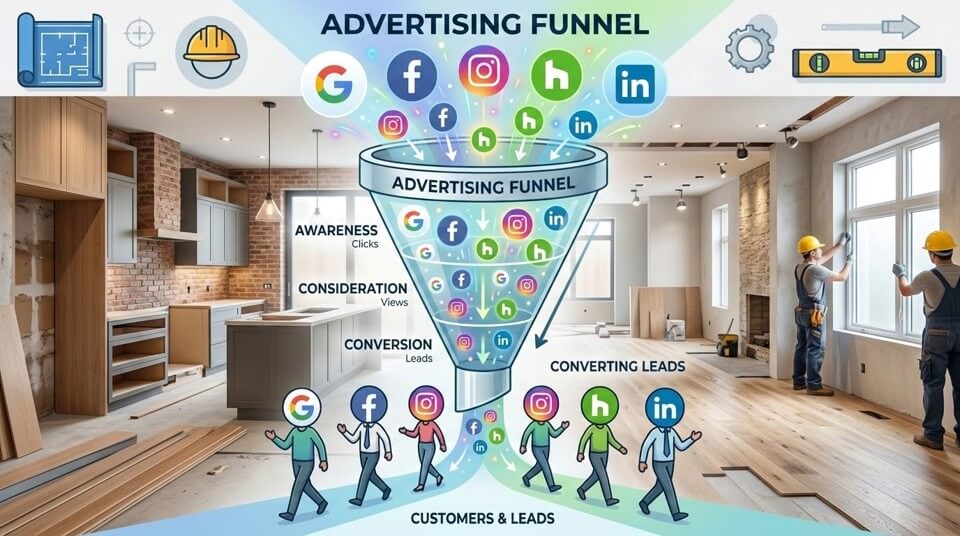
Advertising for construction works best when the channel matches how the homeowner is making the decision. Kitchen and bath contractors need to reach people who may be searching for immediate help, gathering design ideas, comparing showrooms, or waiting for the right time to begin.
A strong channel strategy keeps the message focused and the budget purposeful. At BKBG, we help independent kitchen and bath businesses think beyond visibility alone, so their marketing supports better homeowner education, stronger sales conversations, and more qualified project opportunities.
Why Channel Selection Matters in Construction Advertising
Advertising channels are not interchangeable. A homeowner searching for a local kitchen remodeler is in a different mindset than someone scrolling past a kitchen transformation on social media. Kitchen and bath contractors need to match the channel to the customer’s intent.
Different Channels Reach Different Buyer Stages
Early-stage homeowners may be looking for inspiration, browsing kitchen and bath ideas, saving photos, and learning what is possible. Middle-stage homeowners are often comparing contractors, reviewing project examples, reading guides and FAQs, and visiting websites. Decision-stage homeowners may be searching locally, booking consultations, visiting showrooms, and requesting quotes. The best channel depends on where the homeowner is in the buying journey and what kind of action they are ready to take.
High-Value Projects Need More Than One Touchpoint
Kitchen and bath remodels are high-consideration purchases, so one ad rarely closes a major project. Homeowners may need to see project photos, reviews, educational content, retargeting ads, email follow-up, and showroom information before they feel ready to schedule a consultation. A strong channel strategy supports that longer decision cycle by keeping the business visible and useful across several moments, from early inspiration to serious project planning.
The Wrong Channel Can Attract the Wrong Lead
Some channels may generate volume while producing poor-fit leads. Contractors should avoid choosing channels based only on cheap clicks, high impressions, vanity engagement, or what another company appears to be doing. Better criteria include lead quality, project value, geographic relevance, buyer readiness, and the ability to track results. The right channel should help attract homeowners who match the business’s ideal projects and service area.
Start With the Goal Before Choosing a Channel
Before deciding where to advertise, kitchen and bath contractors should define what they want the campaign to accomplish. A channel that works for brand awareness may not be the strongest fit for consultation requests, lead nurturing, or high-value project promotion.
Goal: Generate Immediate Consultation Requests
When the goal is to generate consultation requests, the best-fit channels are usually Google Search Ads, Local Services-style campaigns where available, retargeting, and website conversion campaigns. These channels work well because they can reach homeowners who are actively searching for help. The message should be direct and action-oriented, such as scheduling a consultation, visiting the showroom, or talking with a kitchen or bath specialist.
Goal: Build Awareness in the Local Market
Local awareness campaigns work best when the business wants to stay visible before homeowners are ready to begin a project. These campaigns can help prospects recognize the showroom, remember recent projects, and connect the business with quality work in the area.
-
Facebook can promote local project examples and showroom updates.
-
Instagram can highlight transformations, design inspiration, and finished photography.
-
YouTube can support short project videos, showroom tours, and helpful design content.
-
Local sponsorships and community newsletters can keep the business visible with nearby homeowners.
Awareness campaigns should focus on recognition, trust, and future consideration.
Goal: Educate and Nurture Prospects
When prospects are interested but still deciding, contractors should use channels that support education over time. Email, blog content, retargeting, social media, and downloadable guides can all help answer questions and reduce uncertainty. The message should focus on planning advice, budget factors, timeline guidance, and design process explanation. These channels help the business stay connected while homeowners compare options, talk with family members, and decide when to move forward.
Goal: Promote High-Value Kitchen and Bath Projects
High-value project campaigns should reach homeowners who care about quality, design guidance, and a better remodeling experience. Google Search, retargeting, Instagram and Facebook ads, YouTube, and email can all support this goal when the message is clear. Focus on design expertise, better layout, premium product selection, project proof, and a guided process. The strongest campaigns position the remodel as an investment in daily function, comfort, and long-term home value.
The Best Advertising Channels for Kitchen and Bath Contractors
The strongest advertising channels depend on the homeowner’s intent, the quality of the creative assets, and the business’s ability to follow up. Kitchen and bath contractors should choose channels based on fit, lead quality, and measurable movement toward consultations or showroom visits.
Google Search Ads
Google Search Ads work well for high-intent leads, local homeowners actively searching, consultation requests, and showroom visits. Use them when the business has a strong landing page, a clearly defined service area, and a goal tied to measurable lead generation. Good keyword themes include kitchen remodeler near me, bathroom remodeling contractor, kitchen design showroom, cabinet showroom, and kitchen renovation contractor. Watch for broad keywords, weak homepage traffic, and campaigns that fail to track calls and form fills.
Facebook and Instagram Ads
Facebook and Instagram Ads are useful for visual awareness, project inspiration, retargeting, and local brand familiarity. They make sense when the business has strong photos or videos and wants to promote guides, galleries, showroom visits, or recent project work. Before-and-after photos, project carousels, short videos, designer tips, and testimonials can all perform well. Contractors should avoid expecting cold social ads to produce only ready-to-buy leads, relying on stock imagery, or overusing discount messages.
Retargeting Ads
Retargeting Ads help re-engage website visitors and keep the business visible during a longer decision cycle. They work best when the website already gets traffic and includes project galleries, planning guides, service pages, or other useful content. Contractors can promote similar projects, planning resources, showroom appointments, testimonials, and design consultations. Retargeting should stay fresh, use clear calls to action, and segment audiences when possible so prospects receive messages that match their interests.
Email Marketing
Email marketing is best for nurturing consultation leads, following up with showroom visitors, and staying visible with longer-term prospects. It works when the business collects email addresses, has a defined follow-up process, and can send helpful content consistently. Strong emails include consultation recaps, planning guides, project stories, FAQs, and showroom updates. Contractors should avoid sending only sales messages, waiting too long after a consultation, or using the same follow-up for every lead.
Common Mistakes When Choosing Advertising Channels
Choosing the wrong channel can waste budget, weaken lead quality, and make a campaign look worse than it really is. Kitchen and bath contractors need to select channels based on customer behavior, campaign goals, available budget, and the process that happens after a lead responds.
Choosing Channels Based on Trends Instead of Customers
Contractors can get pulled toward the newest platform without knowing whether their ideal homeowners use it to research, compare, or contact remodeling businesses. A better approach starts with customer behavior. Identify where prospects look for inspiration, where they compare providers, and where they take action. Then test channels based on campaign goals and lead quality rather than popularity.
Expecting Every Channel to Generate Immediate Leads
Awareness channels should not be judged the same way as high-intent lead generation channels. Social media may help homeowners recognize the business, while Google Search may capture people actively looking for help. Contractors should assign a role to each channel, measure each one accordingly, and use retargeting or email to connect the journey between inspiration, research, and consultation.
Spreading the Budget Too Thin
Small budgets lose strength when divided across too many platforms. A focused mix usually performs better than a scattered campaign. Contractors should start with a simple channel strategy.
-
Prioritize one high-intent channel, such as Google Search.
-
Add one nurturing or awareness channel, such as email, retargeting, or social media.
-
Measure lead quality, project fit, and consultation activity.
-
Expand only after results are clear enough to guide the next investment.
Focus gives the budget enough room to produce useful data.
Ignoring the Website and Follow-Up Process
Ads can bring people to the business, but weak landing pages and poor follow-up can waste the opportunity. Contractors should improve project galleries, landing pages, contact forms, call tracking, email follow-up, and the consultation process before scaling spend. A strong advertising channel works best when the website builds confidence and the follow-up process moves prospects forward with clarity.
How We Help Kitchen and Bath Businesses Strengthen Marketing Channels
At BKBG, we help independent kitchen and bath businesses choose and use marketing channels with greater purpose. Our support helps shareholders connect websites, email, social media, paid search, and showroom conversations to the same goal: stronger homeowner engagement and better project opportunities.
Channel Content That Educates Homeowners
We provide customizable call-to-action guides our shareholders can use across websites, social media, email campaigns, sales presentations, home shows, and trade shows. These guides give each channel something useful to deliver, whether a homeowner is researching online, reading a follow-up email, or speaking with a designer in the showroom. They help prospects get clearer answers before they decide on the next step.
Digital Support Through Content and Affinity Partners
We offer weekly blog content that helps our shareholders keep their websites active and gives social media, email, and search campaigns stronger material to work with. We also connect shareholders with Affinity Partners, including digital marketing agencies and website consultants that can support SEO, paid search, social media, lead generation, website strategy, and broader online visibility. These resources help each marketing channel work from a stronger digital foundation.
Advisory Support for the Systems Behind the Channel
We help showrooms look at the business systems that determine whether marketing attention becomes real opportunity. That can include digital presence, lead management, customer base, selling processes, merchandising, and growth opportunities. A channel strategy works better when inquiry response, follow-up, consultations, and showroom experience are organized. Our advisory support helps shareholders find the gaps that can weaken results after a prospect engages.
Peer Learning, Designer Alliance, and Team Development
We support improvement through our Learning Center resources, Designer Alliance, peer calls, webinars, conferences, and training sessions. These programs help our shareholders learn from other strong showrooms, sharpen team performance, and stay current with best practices. Better channel decisions often come from better customer understanding, stronger designer insight, and clearer sales conversations inside the business.
The Best Advertising Channels for Kitchen and Bath Contractors
Advertising for construction works best when kitchen and bath contractors choose channels based on homeowner intent, project value, and the role each channel plays in the buying journey. Google Search can capture active demand, social media can build local awareness, retargeting can keep prospects engaged, and email can support longer decision cycles.
At BKBG, we help independent kitchen and bath businesses strengthen the strategy behind their marketing channels. Our resources, digital support, business advisory services, peer learning, and professional development programs help our shareholders connect advertising activity to stronger showroom opportunities. Contact us to learn how we can help your business attract better-fit prospects and turn marketing attention into measurable growth.
FAQs
What is advertising for construction?
Advertising for construction is the use of paid, owned, and local marketing channels to reach homeowners or businesses that need construction-related services. For kitchen and bath contractors, it often includes Google Search Ads, social media ads, retargeting, email marketing, project galleries, website content, and local visibility campaigns. The goal is to attract the right prospects and move them toward a consultation or showroom visit.
Which advertising channels work best for kitchen and bath contractors?
The best channels depend on the contractor’s goal. Google Search Ads work well for high-intent homeowners actively looking for remodeling help. Facebook and Instagram can support visual awareness and project inspiration. Retargeting helps bring website visitors back. Email marketing nurtures prospects after consultations or showroom visits. A focused mix usually works better than trying to use every channel at once.
How should contractors choose the right advertising channel?
Contractors should start with the campaign goal, the homeowner’s stage in the buying journey, and the quality of leads they want to attract. A campaign built for consultation requests may need Google Search or retargeting. A campaign built for local awareness may need social media or community channels. The right choice should reflect buyer intent, geography, project value, and measurable results.
Does BKBG provide marketing resources for multiple channels?
Yes. We provide customizable call-to-action guides that our shareholders can use across websites, social media, email campaigns, sales presentations, home shows, and trade shows. These guides help showrooms educate homeowners, answer common questions, and create stronger engagement. They also give prospects useful information that can move them closer to a consultation or showroom visit.
Does BKBG support digital marketing and website visibility?
Yes. We offer weekly blog content that our shareholders can use to support website freshness, search visibility, social media engagement, and homeowner education. We also connect shareholders with digital marketing agencies and website consultants who can support SEO, paid search, social media, lead generation, website development, and broader online presence needs.