
Contractor Advertising Ideas: Campaigns Kitchen and Bath Businesses Can Use Beyond Basic Lead Gen
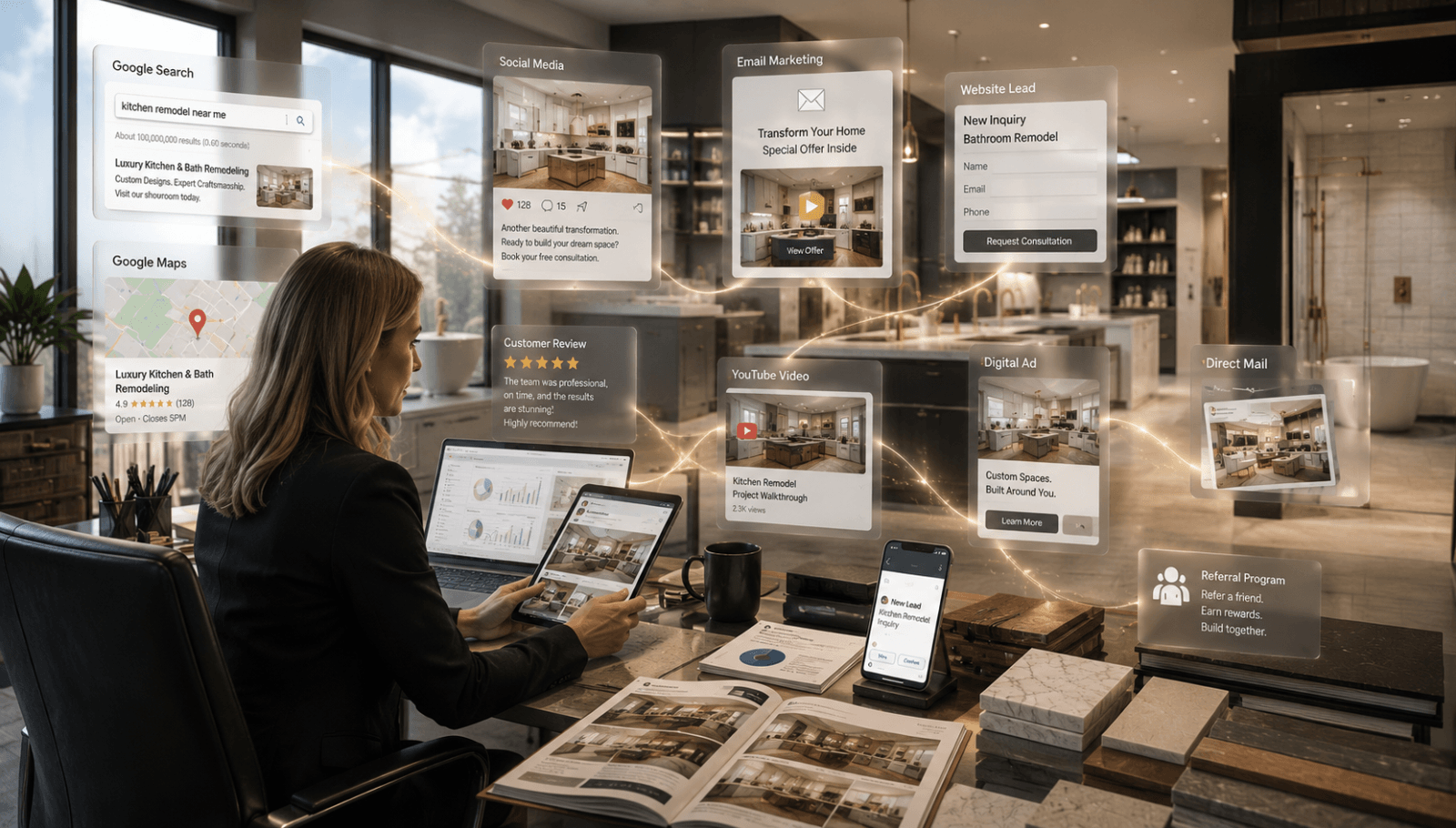
Contractor advertising ideas start getting interesting when they move past the usual scramble for the next form fill. Kitchen and bath businesses need campaigns that build recognition, strengthen referral paths, and keep the showroom visible before a homeowner is ready to book.
At BKBG, we work with independent kitchen and bath showrooms across the country, so we see how smart advertising supports real business growth. The strongest campaigns connect contractors, designers, homeowners, and showroom teams in practical ways. That is where advertising starts to work harder, last longer, and bring better opportunities through the door.
Why Beyond Lead Gen Advertising Matters for Kitchen and Bath Showrooms
Homeowners rarely wake up ready to sign a remodeling contract. They browse, compare, ask around, save photos, visit websites, and form opinions long before they contact a showroom. That early window is where smart advertising starts earning its keep.
The Remodel Decision Starts Early
A kitchen or bath remodel usually comes with months of thinking before a homeowner reaches out. During that period, people are learning the language of the project, studying local options, and deciding which businesses feel credible. A showroom that only advertises to ready-to-book prospects misses the entire research and decision-formation stage. By the time the homeowner fills out a form, their short list may already feel settled.
Trust Builds Before the Appointment
Cabinets, fixtures, surfaces, and layouts matter, of course. The real purchase also includes confidence in the designer, the showroom team, and the process ahead. A homeowner wants to feel that the business can guide decisions, prevent costly mistakes, and keep the project moving with discipline. Advertising that builds familiarity over time gives future prospects a reason to feel steadier when they finally book a consultation.
Recognition Gives Lead Gen a Better Starting Point
In many local markets, competing showrooms run similar ads with similar calls to action. The businesses that create brand recognition earlier enter the lead-gen moment with a stronger position. A homeowner who has already seen a showroom’s project stories, designer insights, contractor relationships, or educational content brings context to the ad. That context can lift response quality and make the sales conversation warmer from the start.
Better Funnel Math Comes From Better Memory
Lead gen works best when the audience has some memory of the business before the offer appears. Repeated exposure can make each future campaign more efficient because the showroom feels familiar at the moment of action. The campaigns ahead focus on that advantage: contractor co-marketing, project storytelling, educational content, referral campaigns, neighborhood visibility, designer authority, event-driven promotion, and partner-backed campaigns that give prospects several reasons to pay attention.
Campaign Idea #1: The Brand Awareness Campaign
A brand awareness campaign introduces your showroom to homeowners before they start calling around. For kitchen and bath businesses, that early recognition can shape who gets remembered, who gets researched, and who feels credible when the project becomes real.
Start With the Homeowners Who Should Know You
Most local markets contain plenty of ideal prospects who have never heard of the showroom down the road. A brand awareness campaign puts your name, work, and point of view in front of in-profile homeowners across your trade area. The audience should be built around geography, homeownership, household income, and home improvement interest signals. This campaign reaches people during the quiet research phase, when they are collecting ideas and forming preferences.
Use Creative That Makes the Showroom Easy to Understand
The creative should tell people who you are with speed and clarity. Keep the message brand-forward, grounded in identity, and easy to remember.
-
Short-form video can introduce the showroom in 15 to 30 seconds, giving homeowners a quick sense of your people, your work, and your process.
-
Finished project photography can communicate caliber fast, especially when the imagery feels specific to the homes and neighborhoods you serve.
-
Designer spotlight content can put real faces behind the work, making the showroom feel human at scale.
-
Simple copy should explain what the showroom does, who it serves, and why its approach feels dependable.
The goal is familiarity. A homeowner should come away with a clean mental note: “I’ve seen them before, and they look credible.”
Measure Memory, Reach, and Future Efficiency
Facebook and Instagram are strong choices for efficient local reach, while YouTube pre-roll gives the showroom room for slightly longer storytelling. Success should be tracked through reach, frequency, brand recall lift, and downstream retargeting audience growth. The lead-gen connection matters here. A homeowner who has seen the showroom’s brand several times often responds better when a booking-focused ad appears later. This campaign builds the memory that future advertising can use.
Campaign Idea #2: The Social Proof Campaign
A social proof campaign helps homeowners feel steadier while they are weighing a kitchen or bath remodel. At this stage, prospects may like the showroom, admire the work, and still hesitate because the project feels expensive, personal, and disruptive.
Speak to the Real Fear Behind the Remodel
The biggest barrier is often fear. Homeowners worry about disruption, poor communication, disappointing results, and the uneasy feeling that comes with spending serious money on a project they cannot fully control. Social proof gives them evidence from people who have already been through the process. A strong campaign shows that the showroom listens, communicates clearly, manages details, and delivers work that feels worth the investment.
Let the Client’s Voice Carry the Message
The most useful social proof feels specific, human, and grounded in the actual project experience. Client testimonial videos can show past clients describing the design process, communication, decision-making, and final outcome in their own words. Project case study carousels can move through the design challenge, solution, finished result, and client quote in a tight sequence. Review highlight ads can pair detailed Google or Houzz reviews with polished project photography, while before-and-after transformation ads communicate trust through the visual proof of a well-managed change. Specificity matters here. “They helped us solve a storage problem in a 1920s kitchen” carries more weight than broad praise about great service.
Track the Signals That Show Trust Is Building
Facebook and Instagram work well for video testimonials because they can reach warm audiences with visual, personal content. Google Display can keep trust-building messages in front of website visitors, while Houzz can amplify reviews where remodel-minded homeowners are already browsing. Measure video completion rate, engagement rate, retargeting audience growth, and downstream consultation conversion rate. When those numbers rise together, the campaign is doing its job.
Campaign Idea #3: The Seasonal Demand Campaign
A seasonal demand campaign helps kitchen and bath showrooms meet homeowners at the moment remodel interest naturally rises. Timing matters here. When planning energy, household priorities, and designer availability line up, advertising can move prospects from casual thinking to booked consultations.
Build Campaigns Around the Remodel Calendar
Kitchen and bath remodeling follows recognizable seasonal patterns. January and February bring new-year motivation, planning content, and budget guide promotions. March through May often centers on spring remodel interest, with messaging around designer availability and summer completion windows. September and October create strong fall momentum, especially for homeowners thinking about kitchens ahead of the holidays. November and December can support year-end budget use, tax planning conversations, and home equity messaging. Each window gives the showroom a clear reason to speak to homeowners with timing that feels practical.
Match the Message to the Season
The campaign should shift as each season develops. A season-opening awareness campaign can use aspirational project content tied to planning themes, neighborhood activity, or common homeowner goals. A mid-season conversion campaign can focus on consultation scheduling, designer calendars, and realistic project timelines. A season-closing retargeting campaign can re-engage people who visited the website, watched videos, saved project imagery, or opened prior emails. The copy should create urgency through real planning logic. Homeowners respond well when the reason to act feels grounded in lead times, decision schedules, installation windows, and designer capacity.
Measure Seasonal Lift Against the Baseline
Facebook and Instagram work well for seasonal awareness because they can reach broad homeowner audiences with timely visual content. Google Ads can capture active search demand during peak planning periods, while email can reactivate past clients, old leads, and warm prospects already familiar with the showroom. Measure consultation volume by season against the prior year baseline, cost per consultation during campaign windows, and project pipeline growth tied to seasonal activity. The goal is simple: turn predictable demand into a steadier, stronger flow of qualified opportunities.
Campaign Idea #4: The Showroom Experience Campaign
A showroom experience campaign brings warm prospects into the physical space where design starts to feel real. For kitchen and bath businesses, the showroom visit can shift a homeowner from online curiosity to a grounded sense of product, process, and possibility.
Make the Visit Feel Easy to Say Yes To
The best audience for this campaign already knows the showroom in some way. Think website visitors, video viewers, guide downloaders, social media engagers, and past email responders who have shown interest without booking a consultation. These homeowners may still feel uncertain about walking in, especially if they expect a formal sales appointment. The campaign should frame the visit as exploratory, useful, and low pressure. A message built around “come see the possibilities” feels easier to accept than one centered on getting a quote.
Show What Digital Browsing Leaves Out
A strong showroom campaign gives people a reason to experience the products in person. The creative should make the physical visit feel valuable before the homeowner reaches the door.
-
A designer-led walkthrough video can show live displays, style range, price-point variety, and the pace of a typical visit.
-
Close-up product content can highlight texture, finish, hardware, cabinet interiors, lighting, and material details that flat images rarely capture.
-
Live display photography can position the showroom as an aspirational place to gather ideas and understand quality.
-
Event-driven invitations can create timely reasons to visit, such as a new vendor introduction, a design trend session, or Saturday designer availability.
These formats help homeowners picture the visit as a practical step in making better decisions.
Measure the Quality of In-Person Momentum
Facebook and Instagram are useful for retargeting warm audiences with visual invitations, while Google Display can bring past website visitors back into the conversation. Email works well for warm lead nurturing, especially when the message connects the visit to planning clarity, product comparison, and designer guidance. Track showroom visit rate from campaign traffic, consultation booking rate from showroom visitors, and average project value from showroom-originated leads. When those metrics improve, the showroom is doing what digital advertising can tee up beautifully: helping homeowners see the project as something they can actually begin.
How BKBG Supports More Sophisticated Advertising Programs
At BKBG, we help independent kitchen and bath showrooms build the structure needed for smarter advertising. Running multiple campaign types takes content, audience insight, creative assets, and channel expertise. Our programs give showrooms stronger footing before the media spend begins.
We Help Solve the Content Production Problem
Sophisticated advertising needs a steady supply of credible content. Our call-to-action guides give showrooms ready-made lead magnet assets that can support thought leadership, retargeting, and conversion campaigns. Each guide is professionally produced, showroom-branded, and customized with the showroom’s logo, contact details, and project photography. Our Elevation Blog Program adds another layer by giving members a consistent stream of professional, SEO-optimized content published under their own brand. That kind of content engine matters because many showrooms have the expertise to educate homeowners, yet limited time to package that expertise into campaign-ready material every week.
We Give Campaigns Better Local Intelligence
Audience targeting works better when it starts with a clear read on the market. Our trade area assessments help showrooms understand where ideal-profile homeowners are concentrated, what local demand looks like, and which growth opportunities deserve attention. That intelligence can shape brand awareness campaigns, seasonal campaigns, showroom visit campaigns, and lead magnet promotions. A showroom in one market may need planning-focused messaging for older homes with dated kitchens, while another may benefit from luxury bath content aimed at high-income neighborhoods. Better inputs lead to sharper campaigns, cleaner spending, and more useful performance data.
We Connect Showrooms With Marketing Partners Who Understand the Category
Managing several campaign types across Facebook, Instagram, Google, YouTube, email, and display takes specialized skill. Through our digital marketing Affinity Partners, we connect members with vetted agencies and consultants who understand showroom marketing, kitchen and bath buying behavior, and the long consideration cycle behind remodeling decisions. That category knowledge matters. A generalist agency may optimize for cheap leads, while a showroom-focused partner can build campaigns around project quality, designer availability, consultation readiness, showroom visits, and long-term pipeline value.
We Turn Real Showroom Expertise Into Stronger Creative
Our Designer Alliance includes 400+ designers working in BKBG showrooms, and that network creates a deep source of authentic campaign material. Project photography, designer insight, process documentation, and professional relationships all help advertising feel more useful and credible. When members run beyond-lead-gen campaigns with stronger creative assets, sharper audience intelligence, and more qualified marketing support, the results compound. The campaigns become easier to build, easier to manage, and better positioned to generate qualified opportunities at a lower cost per result.
Bring Smarter Campaigns Into Your Showroom Strategy
Contractor advertising ideas work best when they support the full remodel journey, from early awareness to showroom visits and booked consultations. Brand campaigns, social proof, seasonal demand, showroom experience campaigns, and content-driven support all help homeowners feel informed, familiar, and ready to take the next step.
At BKBG, we help independent kitchen and bath showrooms build stronger growth systems with practical content, better market insight, trusted marketing partners, and a network of designers who bring real project expertise into the story. Smarter advertising starts with better structure. To strengthen your showroom’s marketing and build campaigns with staying power, contact us today.
FAQs
What contractor advertising ideas work best for kitchen and bath showrooms?
The strongest ideas usually connect to how homeowners actually make remodeling decisions. Brand awareness campaigns help people recognize the showroom early. Social proof campaigns reduce hesitation. Seasonal campaigns meet homeowners when planning energy is high. Showroom experience campaigns bring warm prospects into the space. A balanced advertising plan gives each campaign a clear job, then lets those campaigns work together.
How early should a showroom start advertising before peak remodel season?
A showroom should begin warming the market several weeks before peak demand hits. January planning campaigns can support spring projects, while late summer campaigns can prepare for fall remodel interest. The goal is to reach homeowners while they are researching, saving ideas, and considering budgets. By the time search demand rises, the showroom already feels familiar.
How does BKBG support showroom audience targeting?
We use trade area assessments to help showrooms understand their local markets with greater clarity. These assessments can identify where ideal-profile homeowners are concentrated and what opportunities exist in the showroom’s surrounding area. That insight helps members make smarter decisions about campaign geography, messaging, content priorities, and growth planning. Better targeting usually starts with a better read on the market.
Does BKBG help members find marketing agencies?
Yes. Through our digital marketing Affinity Partners, we connect members with vetted agencies and consultants who understand kitchen and bath showroom marketing. That category experience matters because remodeling has a long consideration cycle, visual decision-making, and a high-trust sales process. We help members reduce the risk of hiring general support that lacks showroom-specific context.
Why do BKBG members have an advantage with beyond-lead-gen advertising?
Our members have access to content programs, trade area insight, vetted marketing partners, business growth resources, and a broad designer network. Those pieces make it easier to build campaigns with stronger creative, sharper targeting, and clearer strategy. We help independent showrooms advertise with a level of structure that can be difficult to build alone.